

With back-to-back East Division championships, the 2024-25 Maryland Black Bears not only had a big target on their back, but also plenty to live up to in terms of success. It was a younger team than years previous and there were plenty of moves that took place during the season, but the team looked to get back to Blaine for a third straight season. However, despite the skill and talent on the team, they came up short, leading to an earlier than expected off-season.
Eight returnees graced the opening night roster, with two others coming back before the NAHL Showcase. September was solid for Maryland, starting with an overtime win and ending with another win at the Showcase. Going 5-2-0 to start the season was a healthy start in search for a third division title, with Mason Stenger, Harrison Smith, and Trey Hinton being the new additions contributing in a big way in the early going while Kareem El-Bashir, Luke Janus, and Evan Sofikitis being part of the returnees continuing the work, while Tyler Stern returned to get graced with the captaincy.
October was a trying month for Maryland, as they split the month with a 4-4-0 record, however it was the start of the big offensive run for Isac Nielsen, who registered five goals and two assists in the eight games on the month as he got more and more comfortable with the North American game. One big hit was Evan Sofikitis getting injured in New Hampshire that would keep him out for months. Yet, the Black Bears are built for a next-man-up mentality on defense, which is how they were able to not panic so much in lieu of the injury.
In November, the Black Bears offense got going with a 6-3-1 record and eight of the ten games seeing Maryland net three or more goals. Smith started to really show his playmaking skills with seven assists in the month, while Victor Mannebratt netted three goals and four assists from the blue line. December brought some adversity to the Black Bears as Smith, Stenger, and Owen Boucher were called up to Youngstown while there was an injury bug on the team that led to call-ups from lower divisions to help fill out the roster. Ryan Denes stepped up big in net with a 4-1-1 record with a .908 save percentage in his first real stretch between the pipes in junior.
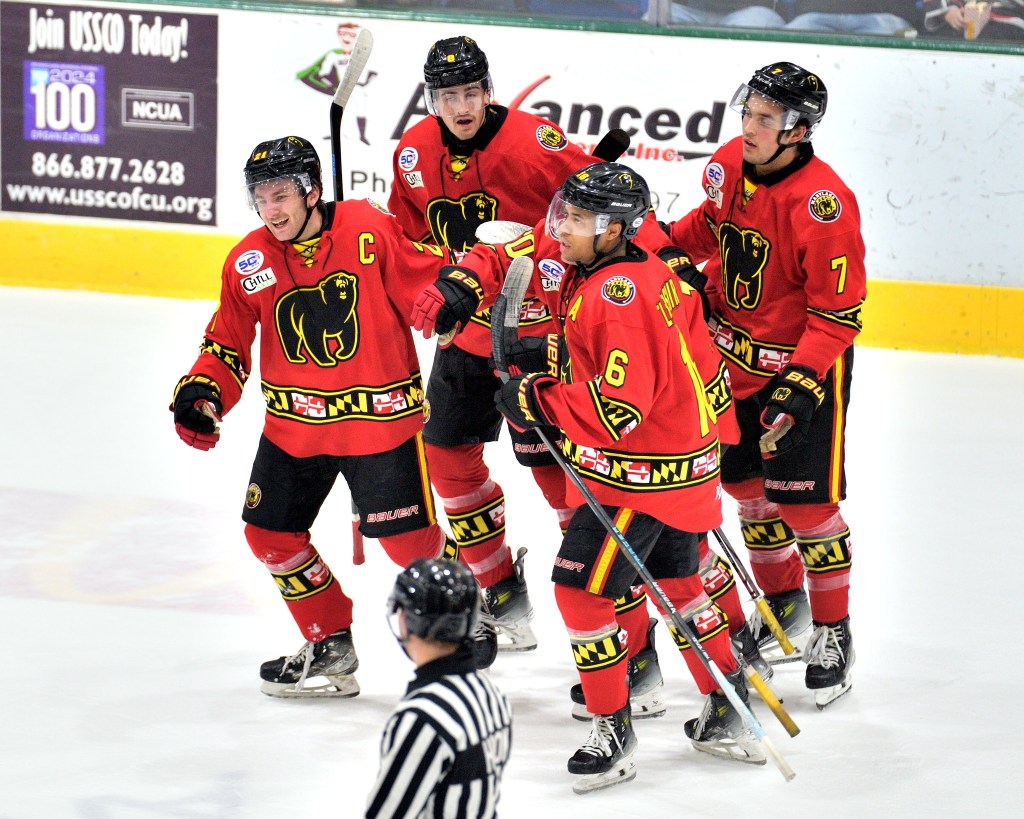
As the calendar changed, so did the roster, as many names were moved around for the Black Bears. Forwards Luke Rubin and Markas Samenas and goalie Benji Motew were traded to various squads, while forward Sebastian Speck came to Maryland from Oklahoma, Matthew Croxall returned from the BCHL and had forward Owen Drury and goalie Marko Bilic not far behind him. It was the biggest month for Maryland with a 7-1-1 record, even with all the changes. There was one more trade at the start of February, which saw Riley Fast go to Oklahoma for forward Travis Bryson.
With the roster set in February, the push to the playoffs were in full swing, but a 4-4-0 month allowed other teams to catch a stride. Mannebratt registered another three-goal, four-assist month, while fellow Swede Nielsen netted another five-goal, two-assist month. March was another bit of a hiccup with a 3-2-4 record, showing that extra time was the undoing for the Black Bears in many cases. The last weekend of the regular season, the Black Bears locked up a bye weekend with a win on Friday night and sat out many of their regulars in the last game for additional rest and to curtail any possible injury risk.
After a week to recuperate, the Black Bears started the playoffs against a team they met in the East Division Final the last two seasons in the Maine Nordiques. The first game had Maryland up through two periods, but a four-goal third for Maine gave them the first win the best of five. Coming back for Game Two, the Black Bears used the home crowd to their advantage as Marko Bilic blanked Maine in a spirited affair to get a split going on the road. Game Three was scoreless through two periods, but Maine exploded for three goals in the final period to put Maryland to the brink. In Game Four, the Black Bears couldn’t get the right bounces and after giving up three goals in the first– they were unable to come back and lost the series three games to one.
There was a lot to live up after the previous two seasons, but this season’s team was able to make their own mark. With a mix of new players and the old guard, this team was an interesting one to watch and one where the development came week-in and week-out. It wasn’t the season anyone wanted, but it’s one that happened. Junior hockey is an interesting beast and with it changing constantly, the Black Bears success is something not many others can boast about. The key now is to keep the winning culture alive and happening.
 Clutch And Crab Hockey